
Airobot V Filters



-
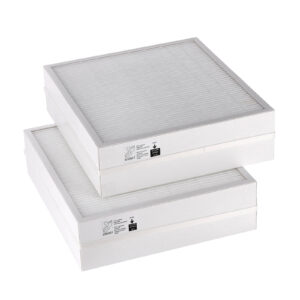 OriginalExtract filter size: 330x300x92 mmSupply filter size: 330x300x92 mmFilter class (EN779): M5+F7Filter quantity in a set: 2 filtersProtection level
Filter protection level indicates efficiency in blocking particles or contaminants, varying by standard and application.
BasicGeneral dust and particle filtration
Pollen and moldCaptures pollen, mold spores, and other allergens
Smog and bacteriaProtects against allergens and urban pollution
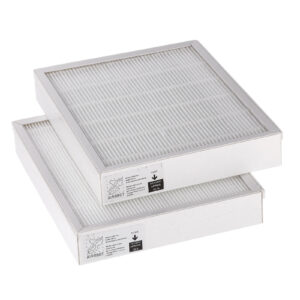 OriginalExtract filter size: 296x231x46 mmSupply filter size: 296x231x46 mmFilter class (EN779): M5+F7Filter quantity in a set: 2 filtersProtection level
Filter protection level indicates efficiency in blocking particles or contaminants, varying by standard and application.
BasicGeneral dust and particle filtration
Pollen and moldCaptures pollen, mold spores, and other allergens
Smog and bacteriaProtects against allergens and urban pollution
1-2 of 2


Customer Reviews


Facebook review

Google review
Google review
Google review
Facebook review
Google review
Need Help? Start Here.
We’ve gathered answers to the most common questions about our products and services. If you can’t find an answer here, please contact us directly.
How do I know which filters fit my Airobot unit?


Check the model name on the unit's rating label. We stock original M5+F7 filter sets for the Airobot L, L5, S1/S2, V3 and V8, and each model takes its own size — for example, the L set measures 269×236×46 mm and the L5 set 305×248×92 mm. If the label has worn off, measure the length, width and depth of your current filters in millimetres and match them against the dimensions on each product page.
What filter class is used in Airobot heat recovery units?
Every Airobot filter set we stock — for the L, L5, S1/S2, V3 and V8 — uses the same two-stage combination:
- Extract side — M5 filter
- Supply side — finer F7 (ePM1) filter
Airobot units adjust airflow automatically from their CO2 and humidity readings, so filters can load up faster during busy periods such as parties, cooking or humid weather. Check them a little more often than the usual 3–6 month interval at those times.
Does a clogged filter throw off Airobot’s smart sensors?
Yes. Airobot's demand-controlled algorithm makes its operating decisions based on stable airflow readings, which it interprets together with the CO2 and humidity sensor data. A clogged filter reduces airflow and can force the system to run the fan at a higher speed than actually needed – increasing noise and energy use. Replacing filters on a regular schedule keeps the smart-control logic accurate and lets the unit run on less electricity.
Are the Airobot filters you sell original?
Yes. All the Airobot filter sets we stock are original M5+F7 sets for the L, L5, S1/S2, V3 and V8, so the size and filter class match what the unit was supplied with. Ordering two or more sets at once gives you a bulk discount, which makes it easy to keep a spare set at home for the next change.
Can I wash and reuse my Airobot filters?
No. The pleated M5 and F7 filters in Airobot units are not designed to be washed or vacuumed. Water and suction damage the filter media and loosen the dust it has already trapped, so a cleaned filter lets more fine particles through and can restrict airflow unevenly. Replace both filters as a set instead.
Still Have Questions?
Support details to capture customers that might be on the fence.
Contact Us Now
