
Oxygen Filters



-
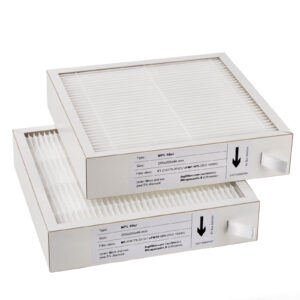 House brand12% SaleExtract filter size: 205x205x46 mmSupply filter size: 205x205x46 mmFilter class (EN779): M5+F7Filter quantity in a set: 2 filtersProtection level
Filter protection level indicates efficiency in blocking particles or contaminants, varying by standard and application.
BasicGeneral dust and particle filtration
Pollen and moldCaptures pollen, mold spores, and other allergens
Smog and bacteriaProtects against allergens and urban pollution
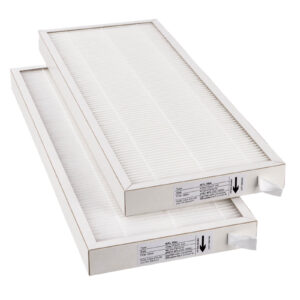 House brandExtract filter size: 434x172x31 mmSupply filter size: 434x172x31 mmFilter class (EN779): M5+F7Filter quantity in a set: 2 filtersProtection level
Filter protection level indicates efficiency in blocking particles or contaminants, varying by standard and application.
BasicGeneral dust and particle filtration
Pollen and moldCaptures pollen, mold spores, and other allergens
Smog and bacteriaProtects against allergens and urban pollution
 House brand13% SaleExtract filter size: 205x205x46 mmSupply filter size: 205x205x46 mmFilter class (EN779): M5+M5Filter quantity in a set: 2 filtersProtection level
Filter protection level indicates efficiency in blocking particles or contaminants, varying by standard and application.
BasicGeneral dust and particle filtration
Pollen and moldCaptures pollen, mold spores, and other allergens
 House brand10% SaleExtract filter size: 434x172x31 mmSupply filter size: 434x172x31 mmFilter class (EN779): M5+M5Filter quantity in a set: 2 filtersProtection level
Filter protection level indicates efficiency in blocking particles or contaminants, varying by standard and application.
BasicGeneral dust and particle filtration
Pollen and moldCaptures pollen, mold spores, and other allergens
 House brandExtract filter size: 294x136x30 mmSupply filter size: 294x136x30 mmFilter class (EN779): M5+F7Filter quantity in a set: 2 filtersProtection level
Filter protection level indicates efficiency in blocking particles or contaminants, varying by standard and application.
BasicGeneral dust and particle filtration
Pollen and moldCaptures pollen, mold spores, and other allergens
Smog and bacteriaProtects against allergens and urban pollution
 House brandExtract filter size: 294x136x30 mmSupply filter size: 294x136x30 mmFilter class (EN779): M5+M5Filter quantity in a set: 2 filtersProtection level
Filter protection level indicates efficiency in blocking particles or contaminants, varying by standard and application.
BasicGeneral dust and particle filtration
Pollen and moldCaptures pollen, mold spores, and other allergens
1-6 of 6Discover our range of replacement filters for your Oxygen ventilation unit, all made in the EU! Our selection includes high-performance filter sets combining M5 (ISO ePM10 50%) and F7 (ISO ePM1 55%) filters, designed to protect your system and improve indoor air quality. All our options are quality-tested and fully compatible with Oxygen MVHR units.
Model compatibility
This category includes filter sets compatible with all major Oxygen MVHR ventilation units, including:
- Easy series
- X-Air series
To ensure the right fit, it’s important to know the exact model of your ventilation unit, as different models require different filters. You’ll find helpful tips on identifying your device in the FAQ section.
Filter types and what they protect against
Our replacement filter sets for Oxygen units are designed to ensure optimal air quality and system performance by combining two filters with different filtration roles. Available filter options:
- M5 filters (ISO ePM10 50%) on the extract or supply side: ideal for capturing larger particles like pollen, mould spores, pet dander, and house dust.
- F7 filters (ISO ePM1 55%) on the supply side: high-efficiency filters that capture very fine particles, including bacteria, smog, tobacco smoke particles, combustion dust, spores, and wildfire smoke particles.
Usage and maintenance
To keep your MVHR system running efficiently and your indoor air clean, we recommend replacing the filters every 3–6 months. However, this depends on your environment, if you have pets, or nearby construction.
To make the process easy, we provide step-by-step replacement instructions for each filter model. You can find them under the “How to change” tab on every product page.
Manufacturing quality you can trust
Our carefully developed house brand filters are made in the European Union by certified manufacturers. They are produced with high-quality materials, under strict ISO 16890 standards to ensure high filtration performance and reliability.
Customer Reviews
 Orginalus kokybiški filtrai, malonus aptarnavimas ir konsultacija
 Mykolas Tamulynas
Facebook review
Patys geriausi atsiliepimai. Užsakytų filtrų grąžinimas, jei neteisingus užsakėte, galima grąžinti nemokamai. Jūrate Jokubauskienė
Google review
Greitas ir kokybiškas aptarnavimas. Geras kainos/ kokybės santykis. Rekomenduoju!Ingrida BaltuškienėGoogle review
Pirkome rekuperatoriaus filtrus internetu, viskas buvo sklandu, puslapiu patogu naudotis, prekes gavome itin greitai.Monika BijeikytėGoogle review
Super aptarnavimas, nuoširdžiai rekomenduoju apsilankyti!!!
Pavel KoliatoFacebook review
Patenkintas dėl to kad įmonė labai operatyviai ir sklandžiai veikiaAnatolij DrozdovičGoogle review
Need Help? Start Here.
We’ve gathered answers to the most common questions about our products and services. If you can’t find an answer here, please contact us directly.
How do I know which filter fits my Oxygen heat recovery unit?
The exact model is printed on the unit's front cover, next to the filter compartment – for example, X-Air C200, Easy C250 or Easy V400E. We stock filter sets for Oxygen Easy and X-Air units, which fall into three filter-size groups:
- C180/C180E, C200/C200E and C250 – one shared filter size
- V200/V200E – their own size
- V400/V400E, V500/V500E and V600 – one shared filter size
If the label is worn or missing, measure your existing filter (length, width, thickness) to confirm the right replacement.
What filter classes are used in Oxygen heat recovery units?
Our Oxygen filter sets come in two versions: an M5+M5 set for general dust protection, and an M5+F7 set with a fine F7 (ePM1) supply filter for better protection against pollen and fine particles.
Both versions fit the same filter slots without any modifications – only the filter class changes, not the size.
Do the Oxygen X-Air C200 and C200E use the same size filters?
Yes. The X-Air C200 and C200E take exactly the same filter set, so you can order it under either model name. In our range the same set also fits the C180/C180E and C250.
The other groups work the same way: the V200 and V200E share one set, and the V400/V400E, V500/V500E and V600 share another.
Is it worth choosing an equivalent filter instead of an original Oxygen one?
Yes – our equivalent filters match original Oxygen filters on all the parameters that matter:
- Manufactured in the EU
- Meet the same ISO 16890 filtration class standards (M5, F7)
- Cut to the same dimensional tolerances
Since filters need replacing several times a year, the price difference adds up noticeably over a year, while filtration quality and airflow throughput don't suffer – which makes equivalents a rational choice for routine maintenance, not a compromise.
How often should Oxygen heat recovery unit filters be replaced?
The recommended standard replacement interval is 3–6 months, but the exact timing depends on the environment – in the city or near a road, dust builds up faster than in a rural area. An F7 class filter, which captures finer particles, usually needs replacing a bit more often than an M5, since its fibre clogs faster.
In spring and summer, during pollen season, it's worth checking the filter every 4–6 weeks, especially if there are people with allergies in the household.
Still Have Questions?
Support details to capture customers that might be on the fence.
Contact Us Now


