
Paul Focus Filters



-
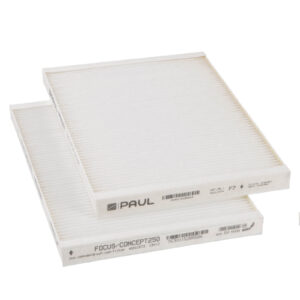 OriginalExtract filter size: 275x187x20 mmSupply filter size: 275x187x20 mmFilter class (EN779): G4+F7Filter quantity in a set: 2 filtersProtection level
Filter protection level indicates efficiency in blocking particles or contaminants, varying by standard and application.
BasicGeneral dust and particle filtration
Pollen and moldCaptures pollen, mold spores, and other allergens
Smog and bacteriaProtects against allergens and urban pollution
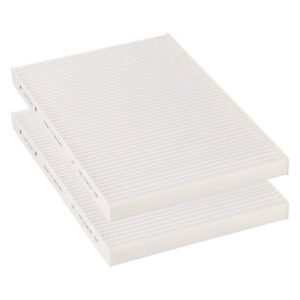 House brandExtract filter size: 275x187x20 mmSupply filter size: 275x187x20 mmFilter class (EN779): G4+G4Filter quantity in a set: 2 filtersProtection level
Filter protection level indicates efficiency in blocking particles or contaminants, varying by standard and application.
BasicGeneral dust and particle filtration
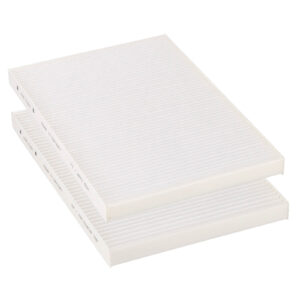 House brandExtract filter size: 275x187x20 mmSupply filter size: 275x187x20 mmFilter class (EN779): G4+F7Filter quantity in a set: 2 filtersProtection level
Filter protection level indicates efficiency in blocking particles or contaminants, varying by standard and application.
BasicGeneral dust and particle filtration
Pollen and moldCaptures pollen, mold spores, and other allergens
Smog and bacteriaProtects against allergens and urban pollution
1-3 of 3Customer Reviews
 Orginalus kokybiški filtrai, malonus aptarnavimas ir konsultacija
 Mykolas Tamulynas
Facebook review
Patys geriausi atsiliepimai. Užsakytų filtrų grąžinimas, jei neteisingus užsakėte, galima grąžinti nemokamai. Jūrate Jokubauskienė
Google review
Greitas ir kokybiškas aptarnavimas. Geras kainos/ kokybės santykis. Rekomenduoju!Ingrida BaltuškienėGoogle review
Pirkome rekuperatoriaus filtrus internetu, viskas buvo sklandu, puslapiu patogu naudotis, prekes gavome itin greitai.Monika BijeikytėGoogle review
Super aptarnavimas, nuoširdžiai rekomenduoju apsilankyti!!!
Pavel KoliatoFacebook review
Patenkintas dėl to kad įmonė labai operatyviai ir sklandžiai veikiaAnatolij DrozdovičGoogle review
Need Help? Start Here.
We’ve gathered answers to the most common questions about our products and services. If you can’t find an answer here, please contact us directly.
How do I find the right filters for my Paul heat recovery unit (Climos, Novus, Focus)?
Paul heat recovery units are divided into several series – Climos, Novus, Focus and others – each with several airflow-capacity variants (e.g. Climos 200, Novus 300, Novus 450, Focus 200, Focus 250). The exact model is shown by a longer letter-and-number code on the front panel of the unit, not just the series name.
Since units within the same series name can have differently sized filter compartments depending on airflow capacity, you need to know the full model code or measure the current filter – that's the only way to guarantee an exact match when ordering.
What filter classes are used in Paul heat recovery units?
Paul units standardly use an M5 class filter for the extract/intake air and an F7 (ePM1) class filter for the supply air – this combination meets the requirements of passive house construction, where all fresh air enters solely through the ventilation system. Some models (e.g. Climos 200) also offer a simpler M5+M5 set without fine filtration.
An F7 filter captures pollen and fine particles better than an M5, so in passive houses, where windows are rarely opened, its effect on indoor air quality is especially noticeable.
What is the Paul ISO Filterbox and how is it different from the recovery unit’s filter?
The Paul ISO Filterbox is a separate, duct-mounted filter box (usually DN160 in diameter) used for additional air filtration before or after the main heat recovery unit, rather than being an internal component of the unit itself. It's often installed in the supply air line when a higher class of filtration is needed – for example activated carbon or F9 level – that the main unit doesn't support.
The filter's size depends on the box's DN diameter, so when ordering you need to specify that diameter, not the heat recovery unit's model.
Is it worth choosing an equivalent filter instead of an original Paul one?
Yes, as long as the filter is made to the same ISO 16890 standards and matches the original's dimensions exactly. Our equivalent Paul filters:
- are manufactured in the EU from the same quality filtering fibre
- are cut to the same tolerances as the original filter
- fit without any modification to the housing
Since filters need to be replaced several times a year, and in a passive house they play a particularly important role in air quality, an equivalent lets you save money without reducing either filtration efficiency or the unit's operating reliability.
How often should Paul heat recovery unit filters be replaced?
The standard interval is 3–6 months, but in passive houses, where the recovery unit is the sole source of fresh air, it's recommended to check the filters more often – every 2–3 months, especially the F7 filter on the supply air side. A clogged filter not only worsens indoor air quality but also increases the load on the fan and energy consumption, since the unit has to work against greater resistance.
During pollen season (April–June), it's worth checking the filter every month.
Still Have Questions?
Support details to capture customers that might be on the fence.
Contact Us Now


